How Heidelberg built one of the world’s largest carbon-neutral districts
C40 Cities Climate Leadership Group, Nordic Sustainability, enero 2021
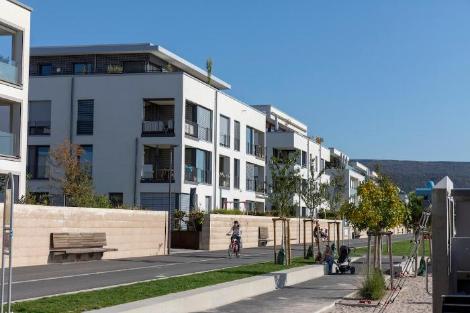
Heidelberg’s Bahnstadt is the size of the city’s entire Old Town, spanning just over a square kilometre (100ha). A former brownfield site, it is now in its final phase of construction.
It is Heidelberg’s first passive-house district and one of the largest passive-house neighbourhoods in the world.
The development is a testing ground for the most ambitious initiatives of Heidelberg’s Masterplan 100% Klimaschutz (100% Climate Protection Masterplan), which aims to cut greenhouse gas (GHG) emissions by 95% by 2050. Bahnstadt will be completed in 2022 and has created 6,000 jobs since work began in 2010.
What is special about Heidelberg’s Bahnstadt district?
Once complete, the Bahnstadt district will be home to around 6,500 people and be near zero carbon in operation. The homes built in the district to date have annual CO2 emissions for energy use of just 0.13 tonnes per inhabitant compared with the Heidelberg city average of 2.0 tonnes. This has been achieved in a number of ways:
-
All buildings, both public and private, have been constructed according to passive-house standards. Building envelopes are highly thermally insulated, airtight and fitted with triple-glazed windows.
-
The district’s street lighting uses LED technology and a tele-management system to adjust lighting to actual demand.
-
Smart metres have been installed in more than 3,000 buildings to monitor energy consumption and identify areas for potential savings.
-
The district’s energy demand is fully met by a nearby wood-chip combined heat and power station, which is part of the local district heating network.
Bahnstadt’s build cost has proven comparable with non-passive-house projects of a similar scale in the region and operating energy costs are significantly lower. The reduction in overall cost has allowed 20% of Bahnstadt’s homes to be designated for social housing.
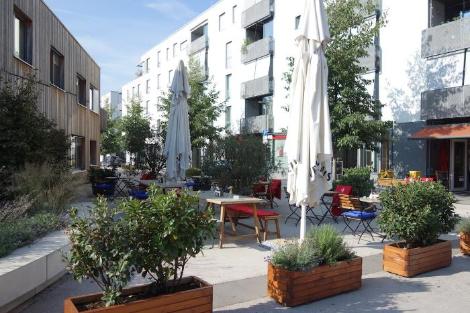
Bahnstadt, which is next to the central train station, has also been designed to minimise transport emissions. A tramline has been extended to include three stops in the area, while 3.5km of new cycle paths to date connect the district with the city centre and other neighbourhoods. A network of charging stations for electric vehicles has been installed, including in public spaces and in private underground carparks. Walking and cycling are also encouraged by a new 1.5km public park in the district, created on the site of an old railway siding.
Lastly, to reduce the risk of flooding in spring and autumn, the district has water-retention basins that allow rainwater to infiltrate into the ground rather than flood the sewer system. Bahnstadt’s building-scale goal of 66% green roofing also helps to reduce flood risk, as well as to provide a habitat for wildlife.
Heidelberg’s advice for other cities
Find creative ways to make high standards compulsory
In our experience, property investors do not commonly apply standards that are higher than those required by law – and passive-house standards are not required by German federal law. We took two core approaches to ensuring that the district was built to our required standards:
-
We founded our own development company rather than sell the area to the highest-bidding development company. The shareholders in our development company include the municipal housing corporation, the municipal savings bank and the regional bank. The development company is responsible for preparing individual building sites and selling them to investors willing to build on them. The sales contracts include requirements that investors have to meet in order to build, including passive-house standards.
-
We used our zoning plans. Updated zoning plans for the Bahnstadt district require investors to use solar photovoltaic (PV) systems on their buildings or to offer the roof space to power companies (such as municipal utilities) that will install the systems instead.
Seek out high-quality advice for investors, planners and architects
Many planners and architects will not have designed or planned buildings to passive-house standards before, so access to expert advice is important in order to support them and, ultimately, to ensure that building standards can actually be met. To this end, the City of Heidelberg has established a valuable working relationship with the Passive House Institute in Darmstadt. The institute’s staff have advised us on the more complex and technical aspects of unusual passive-house buildings, such as laboratories, supermarkets, cinemas and even an indoor swimming pool. You can find information, courses and certified passive-house designers and consultants on the institute’s website.
Develop a robust quality assurance process; you don’t need to rely on passive-house certification
We decided early on that requiring investors to build passive houses through real-estate development contracts wasn’t enough. Someone needed to make sure that the investors actually stuck to those contracts and not just bypass the building standard clause and pay a fine later.
To do this, the City of Heidelberg established a quality assurance system for Bahnstadt:
-
Building application/permit stage. A first assessment of a building’s energy performance using the Passive House Planning Package (PHPP), a design tool created by the Passive House Institute.
-
Building process. Site inspections and documentation of energy-relevant deviations from specified details.
-
Final inspection. Checking the updated PHPP calculation for compliance with passive-house criteria.
A local energy agency, KliBA, has been involved in assessing building applications during the approval process and has been working with energy planners and architects to perform regular inspections throughout the building process.
Our quality assurance system replaces the requirement for passive-house certification, which many investors do not have. Having our own quality assurance system and working with the local energy agency to implement it has given us greater insight into the building process and flexibility in discussions with investors.
Communicate the benefits widely, especially in the early stages
Energy efficiency and sustainability are integral parts of the district’s identity. In the beginning, the Bahnstadt development invested heavily in public relations and communications to promote this identity and the benefits it brings, as it was new to most investors and to the people moving in. As the district has attracted national and international attention over the last few years, this identity has attracted many sustainability-oriented businesses, as well as residents pursuing a ‘green’ lifestyle.
This, coupled with Bahnstadt’s location, transport links to the rest of the city and the high housing demand in Heidelberg, has meant that apartments have been sold or let before they were even built. Even so, the continued involvement of the city’s Public Relations Office has helped to ensure that the district is seen in a positive light. It also responds to any issues that residents have with living in a still-growing part of the city with new technologies.
At a Glance
-
Heidelberg’s Bahnstadt, spanning just over a square kilometre, is one of the world’s largest passive-house neighbourhoods. Once completed in 2022, it will be near zero carbon in operation.
-
Bahnstadt is a testing ground for the most ambitious actions in Heidelberg’s climate action plan and has created 6,000 jobs since work began in 2010.
-
Cities developing their own passive-house districts will need to find creative ways to make high standards compulsory. The City of Heidelberg founded its own development company and upgraded zoning plans to ensure the district was built in line with its targets.
-
Expert advice for investors, planners and architects is available from the Passive House Institute.
-
Cities can develop robust quality assurance processes to ensure investors adhere to contracted building standards rather than ignore them in the hope of just paying a fine afterwards.
-
Cities should communicate the benefits widely, especially in the early stages, and keep staff available to respond to any issues experienced by residents living in new neighbourhoods with new technologies.
Referencias
Online Document: How cities can put a price on carbon
Para ir más allá
Website: www.c40.org/