Cities100: Cape Town is spearheading South Africa’s shift towards a decentralised, renewable energy supply
C40 Cities Climate Leadership Group, Nordic Sustainability, octubre 2019
South Africa’s energy supply is dominated by coal, which supplies 85% of the country’s electricity. To accelerate the low-carbon transition, the City of Cape Town has taken matters into its own hands and is developing legislation to increase the share of renewables in the system.
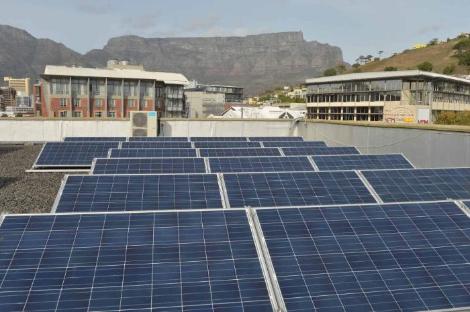
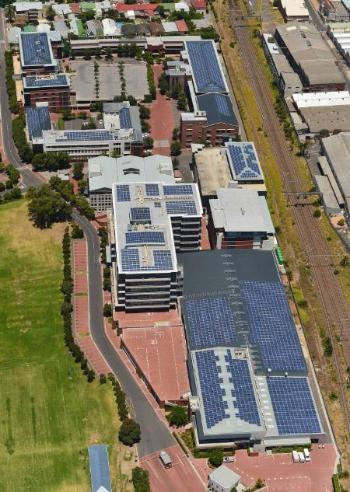
Cape Town’s Small-Scale Energy Generation (SSEG) programme promotes the uptake of rooftop solar photovoltaic (PV) systems and small wind turbines in the commercial and residential sectors, allowing consumers to become producers and sell excess electricity generated back to the grid, fostering a more decentralised and sustainable electricity supply.
Cape Town’s Small-Scale Energy Generation (SSEG) programme is reducing the city’s reliance on coal energy, promoting local resale of electricity, and diversifying the energy mix. Electricity “prosumers” can connect their renewable energy systems to the city’s grid, exporting to the grid when they generate more electricity than they are using, in exchange for credit.
The city is promoting independent local power production by challenging the exclusive rights of the public utility to procure electricity for resale. The city successfully took the case to the High Court to allow the city to procure electricity from independent power producers, which will make it more profitable for residents and small businesses to install small-scale renewable energy systems and feed excess electricity to the grid. Learn more about this in Legal Interventions: How cities can drive climate action.
The project is a first step in triggering the shift from coal-based electricity generation in South Africa. In the absence of national legislation regarding SSEG installations and tariffs, the city assumed leadership by developing suitable tariffs, bi-directional metering systems, and automated billing systems that allow the purchase and sale of electricity. The city’s legislation has been adopted by surrounding municipalities in the Western Cape Province, and is being incorporated into national legislation.
This is one of the 100 solutions highlighted in the 2019 edition of Cities100. Now in its fourth year, Cities100 provides recognition for 100 of the boldest projects from cities around the world which are working to address climate change and build a better, greener future. The publication highlights solutions that are replicable and scalable, and which reduce emissions and address the issues that cities face as a result of climate change. Read the Cities100 report, by C40 and Nordic Sustainability, for full details.
Cape Town’s advice for other cities
Provide training opportunities
To address the challenge of a limited capacity of trained installation technicians, the city partnered with a local NGO and industry association to develop a training programme for solar PV installers. The programme offers subsidies for male electricians (75% subsidy) and female electricians (100% subsidy). To date, 113 successful candidates have received the solar PV training, 66 of which were sponsored by the city under its SSEG programme.
Share what you have learnt
When the programme started, there was no national legislation in South Africa regarding SSEG installation and tariffs, and so the city initiated research on the implementation of small-scale renewable energy systems within South African context. This involved extensive collaboration with government bodies, an NGO, and a utility association, and the results have been made open source for the benefit of other cities following in their footsteps.
Wider benefits
Social: As a city that suffers from frequent blackouts, the SSEG programme provides a solution by improving energy security for its residents and supporting the diversification of energy sources. Reliable access to energy enhances citizens’ quality of life, access to technology and communications, and productivity.
Health: The programme emphasizes building citizen collaboration and capacity to ensure the energy systems are installed safely and legally, thereby reducing accidents and hazards.
Economic: Sourcing more electricity from renewable energy technologies is critical for Cape Town to build a more robust economy and create local jobs.
Environmental: The primary environmental benefit of the SSEG programme has been the reduction in CO2 produced – an estimated 77,868 tonnes to date – due to the shift from coal-based electricity generation to solar and wind.
Referencias
Online document: Cities100 : Le Cap est à l’avant-garde de la transition de l’Afrique du Sud vers un approvisionnement énergétique décentralisé et renouvelable
Para ir más allá
Website: www.c40.org/