Valencia: Climate-resilient tourism and urban regeneration - Zentropy MICE
2025
Urban Agenda for the EU (UAEU)
Imagine a city where conferences and major events don’t just bring visitors—they leave a lasting positive mark. That’s the vision behind Zentropy MICE, Valencia’s bold project to turn its thriving events industry into a force for good.
As a pioneer in sustainability (named 2024 European Green Capital), Valencia is testing new ways to make sure that every congress, trade show, or festival reduces waste, supports local businesses, and gives back to neighborhoods—not just the big venues. How? By tracking and improving the way events use energy, materials, and knowledge, so that their benefits—economic, social, and environmental—ripple across the entire city. From repurposing event materials to connecting attendees with local shops and cultural spots, the project proves that big gatherings can be both vibrant and virtuous.
It’s a blueprint for cities that want their events to do more than just fill hotel rooms—they want them to build a better future.
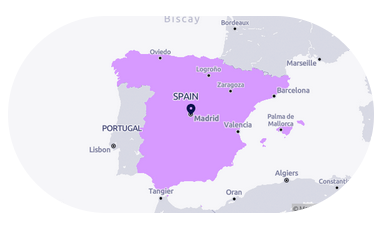
Valencia, the 2022 EU Smart Tourism Capital and 2024 EU Green Capital, is developing the Zentropy MICE project under the European Urban Initiative Innovative Actions programme to transform its MICE sector (Meetings, Incentives, Conferences and Events) into a driver of sustainable urban development. Inspired by thermodynamics, the project introduces a governance and measurement framework to optimise flows of Energy, Matter, and Information (E+M+I) generated by events — reducing environmental impact and maximising the social, economic, and cultural legacy left in the city and its neighbourhoods. Zentropy MICE is embedded in Valencia’s Climate Action Strategy, its Tourism Strategic Plan 2024–2028, and its Smart Tourism Destination framework.
Presentation and context
Local context, vision, challenges
Valencia’s established sustainability policy framework — Missions 2030, its Climate Agreement targeting neutrality by 2030, and a Tourism Strategic Plan 2024–2028 — created the political conditions for an ambitious intervention. However, despite these credentials, the MICE sector remained a blind spot: value concentrated among large operators, minimal direct legacy reached residents or local neighbourhoods, and environmental externalities from energy, waste, and mobility went largely unmeasured.
Zentropy MICE was conceived to close this gap, transforming events from isolated economic transactions into regenerative urban cycles. The project connects the Valencia Conference Centre — a major international congress venue — to the city’s districts, local SMEs, social enterprises, and knowledge institutions. Its central challenge has been embedding a novel conceptual framework into the workflows of a traditionally conservative sector, while developing standardised methodologies for holistic impact measurement, including the hardest indicators to capture: knowledge transfer and social legacy.
Key stakeholders and partners
The project operates through a quintuple helix governance model. Valencia City Council leads strategic direction and policy integration across tourism, environment, innovation, and social services. The Valencia Conference Centre is the operational partner and primary pilot venue for the Zentropy framework. Khora Urban Thinkers, a consultancy specialised in urban innovation and participatory design, leads the co-design process with the Municipality. València Innovation Capital, the city’s municipal innovation foundation, embeds innovation into the project’s DNA through its focus on social innovation, entrepreneurship, and technology ecosystems. The Polytechnic University of València provides methodological support for the entropy measurement model. The Visit València Foundation (DMO) integrates Zentropy into the wider destination offer and leads the development of a social currency mechanism to incentivise sustainable behaviour among congress participants — drawing on the experience of Copenhagen’s CopenPay initiative as a model for adaptation. International peer cities — Ljubljana, Larissa, and Heidelberg — ensure European transferability.
Over 100 stakeholders are engaged in co-design and implementation, including local SMEs, hospitality providers, event organisers, NGOs, social enterprises, schools, and citizens — ensuring the economic and social benefits of events are distributed across Valencia’s neighbourhoods.
Implemented solutions
-
Zero entropy model and entropy calculator: Nine sectorial programmes — sustainable mobility, circular materials, food systems, knowledge exchange, energy communities, and neighbourhood activation — are applied before and after each event to measure and reduce E+M+I flows. The Entropy Calculator provides quantifiable metrics on environmental, social, and economic outcomes, including legacy indicators beyond standard event sustainability reporting.
-
Circular economy integration: Event materials (wood, carpet, canvas) are repurposed through local social enterprises; food waste reduction programmes connect conference catering to local schools and NGOs, generating direct social co-benefits alongside environmental gains.
-
Neighbourhood tailor-made tourism offer: MICE participants receive personalised itineraries linking them to Valencia’s districts — local businesses, cultural spaces, and community experiences — redistributing visitor spending beyond the conference centre.
-
Energy communities and sustainable mobility: Pilot energy community models tied to event venues and low-carbon mobility options for delegates contribute directly to Valencia’s climate neutrality targets.
-
Urban innovation Sandbox: A dedicated testing environment hosted by Valencia Innovation Capital enables real-world piloting of circular and digital MICE solutions before scaling — reducing implementation risk through adaptive iteration.
Results and impact
Keys to success
Valencia’s pre-existing sustainability credentials provides institutional credibility and sustained political commitment, allowing the project to anchor itself in a municipality already mobilised around climate neutrality. The quintuple helix governance model ensures that measurement rigour, operational feasibility, stakeholder ownership, and transferability are built in simultaneously rather than retrofitted. The Urban Innovation Sandbox enables iterative testing across two pilot events at the Valencia Conference Centre, building evidence progressively and reducing resistance from the private sector. Crucially, the integration of Zentropy MICE into Valencia’s formal strategic frameworks — its Climate Action Plan, PSTD, and Tourism Strategic Plan — embeds the approach beyond the EU project lifecycle.
Transfer tips
-
Assess your local ecosystem and governance capacities before adopting the model.
-
Integrate events tourism into urban planning from the outset: connecting conferences to mobility, public space, neighbourhood economies, and local value chains unlocks far greater sustainability and legacy outcomes than managing events in isolation.
-
Invest in robust impact measurement before scaling — including social and knowledge legacy indicators, which are the most demanding to capture but essential to demonstrating holistic value.
-
Build the coalition early and plan for longer timelines than expected: coordinating actors with different institutional cultures and priorities requires sustained facilitation and adaptive governance.
-
Anchor the innovation in formal municipal policy — embedding a new model within existing strategic frameworks is what converts a pilot project into a durable governance shift.
-
Look for peer learning across cities: one of the key insights from the Copenhagen event was the value of collaborating with CopenPay to adapt its social currency mechanism to the MICE context — demonstrating that behavioural change tools developed in one city can be meaningfully transferred and tailored to another.
Referencias
Urban Initiative Eu website: Valencia: Climate-resilient tourism and urban regeneration - Zentropy MICE
Para ir más allá
Website: www.urbanagenda.urban-initiative.eu/