Why cities should promote access to healthy and sustainable food for all
C40 Cities Climate Leadership Group, Nordic Sustainability, febrero 2023
Food systems have a major impact on climate change and public health. Cities can play an important role in building more sustainable food systems and helping their residents to eat a healthier diet. This article explains why this shift is worth pursuing.
Food consumption accounts for around 13% of cities’ greenhouse gas emissions – mostly from animal-sourced food
Food production is one of the main drivers of environmental change. It contributes significantly to biodiversity loss, freshwater consumption, land-use change and deforestation. It generates significant quantities of nitrous oxide (N₂O) and methane (CH₄), both of which are very potent greenhouse gases (GHGs), as well as smaller quantities of carbon dioxide (CO₂).
With more than half of the world’s population living in urban areas, cities consume a considerable amount of the food produced, making food one of the main factors contributing to consumption-related GHG emissions in cities. Across the C40 cities, food consumption accounts for around 13 per cent of total GHG emissions.1 This figure varies from city to city, but this estimate is representative for many cities.
Around 75 per cent of food-related emissions are attributable to the consumption of animal-based foods.2 The consumption of animal-based foods generates significantly higher emissions, as it includes both emissions from livestock and those associated with the crops grown to feed them.
Unless we make fundamental changes to our dietary habits, GHG emissions from the food sector are projected to rise by 38 per cent by 2050.3
Improving equity in food consumption brings considerable health and economic benefits for citizens and cities
In cities around the world, millions of people face food insecurity, hunger, malnutrition and micronutrient deficiencies due to insufficient access to food. This has significant repercussions for their health, as hunger and malnutrition weaken the body and make it more vulnerable to disease and infection. In turn, these health impacts affect children’s education, productivity at work and the economy of cities.
In London, for example, around 16 per cent of adults and 14 per cent of children are food insecure, with single-parent families among those most at risk.4
In the Kansas City metropolitan area, 13 per cent of households are food insecure, a figure that rises to 30 per cent for single-parent families.5 This figure is significantly higher in many countries of the Global South.
At the same time, many people have an unhealthy diet that contributes to obesity, premature death and rising healthcare costs.6 Insufficient consumption of fruit, vegetables, nuts and pulses, and excessive consumption of red meat and dairy products(note) 7 and ultra-processed foods and/or those high in fat, sugar and salt8 are associated with chronic diseases such as coronary heart disease, strokes, cancer and type 2 diabetes.
All too often, access to food and its cost limit people’s ability to make healthy food choices, and food marketing often encourages unhealthy eating. Cities can play an important role in addressing these issues.
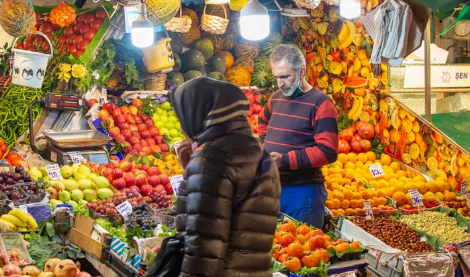
Food waste represents a costly waste of human and natural resources
Around one-third of global food production is lost or wasted. It is estimated that this amounts to over 900 billion US dollars, which is roughly equivalent to the annual GDP of Indonesia or the Netherlands.9 At household level, the proportion of food purchased that ends up in landfill ranges from around 4 per cent in Denmark or Japan to over 20 per cent in Canada and the United States.10
Food waste represents a waste of labour, water, energy, land and other resources used in its production.11 In the United States, for example, around 20 per cent of cultivated land, fertilisers and water used for agriculture are employed to produce food that is ultimately wasted. 12
Food waste accounts for more than half of the municipal waste stream in most cities, and as much as 80 per cent in some, driving up the costs associated with solid waste management. Consequently, food waste is also the main source of GHG emissions from cities linked to the waste sector.13
Reducing food waste, through the recovery and donation of surplus food to those in need, helps to promote equity and reduce food insecurity, particularly when carried out as part of food aid programmes.
Cities have a vital role to play in establishing healthy and sustainable food systems
Ambitious cities are already working to help their residents adopt a healthier and more sustainable diet, sometimes referred to as the ‘ Planetary Health Diet ’ (see box below).
Cities can promote better eating habits and healthier food systems by :
-
Using public food procurement. When local authorities purchase food directly for schools, hospitals and other public institutions, they can ensure that these meals are healthy and sustainable, and, ideally, organically produced.
-
Ensuring that healthy food is the easiest, most appealing and most affordable option (also known as creating a ‘ sustainable food environment ’). Cities can promote a balanced and nutritious diet, influence the distribution, availability and affordability of different foods, and regulate food advertising in public spaces. They can also introduce or expand food assistance programmes that prioritise healthy and sustainable foods in order to tackle food insecurity and boost the local food economy.
-
Reduce food loss and waste, and improve the circularity of the local food system. Cities can set a target of a 50 per cent reduction compared with their baseline. By collecting and processing residual food waste separately, rather than sending it to landfill, cities can also produce compost for parks and farmers in the city and the wider region, as well as natural gas and other valuable products.
The Planetary Health Diet
The ‘Planetary Health’ diet involves eating plenty of fruit, vegetables, nuts and pulses, as well as smaller quantities of animal-based foods and highly processed foods. More specifically, it is a balanced and nutritious diet that provides each adult with up to 2,500 calories per day, does not exceed 16 kg of meat per year (equivalent to around 300 g per week) and 90 kg of dairy products per year (equivalent to around 250 g per day).
Widespread adoption of the ‘Planetary Health’ diet would significantly reduce emissions from the food sector and ensure that the global food system can provide a balanced and nutritious diet for 10 billion people. It would also save 11 million lives each year by reducing the impact of diet-related diseases.
For more information on the ‘Planetary Health’ diet and the research underpinning it, see the EAT-Lancet Commission report entitled « Food in the Anthropocene », as well as the report by C40, Arup and the University of Leeds entitled “ Addressing food-related consumption-based emissions in C40 Cities.
Cities making ambitious commitments on food
As signatories to the “ C40 Good Food Cities Accelerator ” initiative, 14 cities have committed to implementing a diet that promotes the health of the planet for all their citizens by 2030. These cities have committed to using their purchasing power, improving their ‘ food environment ’ and reducing food loss and waste. They will work with citizens, businesses, public institutions and other organisations to develop a joint strategy aimed at implementing these measures, achieving these goals in an inclusive and equitable manner, and integrating this strategy into their climate action plans.
In addition, 199 cities are collaborating and taking action under the Milan Pact on Urban Food Policy, which sets out 37 recommended measures in the areas of food governance, sustainable diets and nutrition, food supply and distribution, the reduction of food waste and other areas.
Collaboration with other cities, through networks and campaigns, provides access to a peer group, greater influence and other benefits. Both the Declaration and the Pact are open to new signatory cities. Large public and private organisations providing catering services can also sign up to the ‘ Cool Food Pledge ’ to support and publicise their efforts to improve their food procurement.
At a glance
-
Food production is one of the main drivers of environmental change, and food consumption accounts for around 13 per cent of cities’ greenhouse gas emissions – primarily from animal-based foods.
-
Around a third of global food production is lost or wasted, representing a waste not only of the food itself, but also of the labour, water, energy, land and other resources required for its production. Food waste also accounts for more than half of the municipal waste stream in most cities, driving up the costs associated with solid waste management.
-
Millions of people living in cities around the world face food insecurity, hunger, malnutrition and micronutrient deficiencies due to insufficient access to food. At the same time, many have unhealthy diets that contribute to obesity, premature mortality and rising healthcare costs. These two issues affect citizens’ health, with knock-on effects on children’s education, productivity at work and the economy of cities.
-
Cities can play a vital role in steering food consumption towards a diet rich in fruit, vegetables, nuts and pulses, and lower in animal-based products. They can amend municipal food procurement policies, ensure that healthy foods are a more accessible, attractive and affordable option, and help to reduce food loss and waste.
1 C40 (2019) In Focus : Addressing food-related consumption in C40 cities.
2 C40 (2019) In Focus : Addressing food-related consumption in C40 cities.
3 C40 (2019) Thematic Briefing : Addressing food consumption in C40 cities.
4 Greater London Authority (2022) Londoners’ Survey 2021–2022.
5 Healthcare Foundation of Greater Kansas City (2017)An invisible problem: food insecurity.
6 FAO (2018) The State of Food Security and Nutrition in the World: Building Climate Resilience for Food Security and Nutrition.
7 EAT-Lancet Commission (2019) 31788-4/fulltext) Food in the Anthropocene : the EAT-Lancet Commission on healthy diets from sustainable food systems.
8 Brazilian Ministry of Health (2014) Dietary recommendations for the Brazilian population.
9 Mugica Y. and Hoover D. (2019) Tackling food waste in cities: a toolkit of policies and programmes. NDRC.
10 Statista (2018) Households waste more food than previously thought.
11 C40 (2019) Spotlight on: managing food consumption in C40 cities.
12 Mugica, Y. and Hoover, D. (2019) Tackling food waste in cities: a toolkit of policies and programmes. NDRC.
13 FAO (2015) The impact of food waste on climate change.
Referencias
Para ir más allá
Website: www.c40.org/