Mayor Sadiq Khan’s global advocacy on fossil fuels (London)
2026
Sadiq Khan, Mayor of London and Co-Chair of the C40, embodies cities’ commitment to a just transition away from fossil fuels. Appointed Special Envoy for Fossil-Free Cities in 2025, he is using his platform to accelerate the global transition, highlighting the tangible benefits: cleaner air, sustainable jobs and resilient infrastructure.
Under his leadership, London has introduced ambitious policies, such as the Ultra-Low Emission Zone (ULEZ), which has reduced air pollution, improved public health and created green jobs. His advocacy also extends to the international stage, where he calls on governments to take action against the excessive influence of the fossil fuel industry.
A case study taken from the report: How cities are tackling fossil fuels (see the linked sheet)
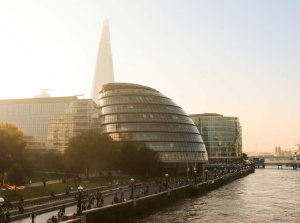
In 2025, Mayor of London and C40 Co-Chair Sadiq Khan was appointed as the Special Envoy, Fossil Free Cities for the Fossil Fuel Non-Proliferation Treaty Initiative.
The role is aimed at accelerating the global transition away from fossil fuels and amplifying the voice of cities in the fight against the climate crisis, ensuring they mobilise collectively to support the urgent effort to transition away from fossil fuels equitably, and finance a more just, sustainable future.
Mayor Khan has long spearheaded bold, practical advocacy and action on fossil fuels, focusing on ensuring that the benefits of this transition, cleaner air, sustainable jobs, and resilient infrastructure, are shared by all, particularly vulnerable communities. His efforts have included:
-
Leading the way in ambitious policies to reduce dependence on fossil fuels, like the Ultra Low Emission Zone (ULEZ) in London, which has drastically reduced air pollution, improved public health, created green jobs, and built a more resilient city.
-
Accelerating the transition to low-carbon heat through ambitious policies in the London Plan. 90% of developments approved in 2024 proposed installing a heat-pump led system, and 94% of developments proposed solar PV, with policies overall responsible for saving over 33,000 tCO₂ per year from proposed developments compared to national standards.
-
Changing the conversation on the global stage. London and Freetown mayors Sadiq Khan and Yvonne Aki-Sawyerr, Co-Chairs of C40, have long advocated for a more truthful conversation on fossil fuels, including demanding at COP28 that national governments act to curb the undue influence of the fossil fuel industry.
-
Using evidence and legal routes to campaign for national change. London submitted statements and evidence from its clean air work to support a series of cases brought by environmental lawyers ClientEarth since 2015 to challenge the United Kingdom’s national air quality plans under the previous government.
-
Spearheading city efforts to divest from fossil fuels, by working with the London Pensions Fund Authority (LPFA) to implement a climate change policy covering nearly GBP 10 billion in assets. This includes divesting from all extractive fossil fuel investments and setting a target for 5% of the fund to be invested in climate solutions. As the Chair of the C40 Cities Clean Investment Accelerator, Mayor Khan has helped expand fossil fuel divestment and green investment globally, sharing tools and knowledge to accelerate the transition.
What is the Fossil Fuel Treaty?
The Fossil Fuel Treaty Initiative is an alliance of nation-states and civil society working to secure a global just transition from coal, oil and gas. They are seeking a new, binding legal instrument to manage the international phase out of fossil fuels and build a safe and sustainable future for all. The Fossil Fuel Treaty Initiative is now supported by 17 countries, actively participating in discussions on a global, binding mechanism to address fossil fuels. They’re joined by over 130 cities and subnational governments, including the State of California, alongside a massive coalition: over 1 million citizens, nearly 4,000 civil society organizations, 3,000+ academics and scientists, hundreds of health professionals and institutions like the WHO, faith leaders including the World Council of Churches, 850+ elected officials, the European Parliament, 101 Nobel laureates, 25 banks, unions representing 35 million workers, businesses, youth advocates, and Indigenous peoples.
Affordable, safe and reliable fuels
Cities are actively reducing fossil fuel dependence through demand-side innovations. Buildings are electrified and optimized for efficiency, with cities like Seattle, San Francisco, and New York enforcing fossil-free energy codes for new constructions. Targeted programs help existing buildings decarbonize heating and cooling—New Delhi banned coal burning in 2023, while Warsaw supports low-income households in transitioning away from coal. Educational initiatives, such as Seattle’s no-cost audits and upgrades, further drive change.
Urban transport is being transformed by accelerating the shift from internal combustion engines to electric vehicles, public transit, and active mobility. Over 35 cities, including 28 in the C40 network, have pledged to create zero-emission zones by 2030, prioritizing walking, cycling, and clean public transport. Infrastructure for EVs is expanding rapidly: Delhi has installed 1,400 chargers with cost-reducing incentives, and Rio de Janeiro plans 15 fast-charging hubs by 2028.
Industrial and commercial sectors are also evolving. Barcelona’s ports are electrifying docks to improve air quality, while Tokyo’s cap-and-trade program limits emissions from large facilities. Circular economy principles, like those in Salvador, reduce fossil-based waste by integrating life-cycle costs and material sustainability into procurement. Sector-specific strategies, such as Paris’s Pacte Pour la Construction Parisienne, ensure holistic reductions in carbon emissions across construction and industry.
Referencias
Extract from pages 15 to 17 of the document: How cities take action on fossil fuels
Para ir más allá
C40 Cities : www.c40.org/