Water, an essential resource : how Mauges Communauté is developing an integrated public policy
Agence de l’eau Loire-Bretagne (Loire-Bretagne Water Agency, ), April 2026
Faced with the historic drought of 2022, Mauges Communauté realised just how vulnerable the Loire is and how urgent it is to rethink water management.
This factsheet outlines how the region has transformed its governance: pooling of responsibilities, creation of a ‘local bloc’ for collective decision-making, and citizen engagement through innovative tools (citizen monitors, the Water Mural, World Water Days).
An integrated strategy in which water becomes the common thread running through all public policies (SCOT, PLU, economic development), with fair pricing and massive investment (€20m per year) to modernise the networks. A collaborative, transparent and forward-looking approach, in which every resident plays an active role in preserving this resource.
To download : l_eau_ressource_essentielle__comment_mauges_communaute_construit_une_politique_publique_integree_fr.pdf (1.8 MiB)
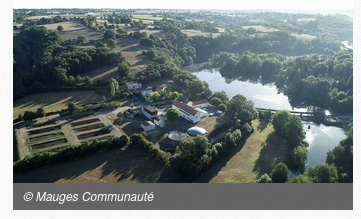
For Mauges Communauté (49), the issue of water pricing forms part of a broader vision : to guarantee every resident access to sufficient quantities of high-quality water, whilst supporting the region’s economic vitality. This ambition may require major investment to modernise and bring water and sanitation infrastructure up to standard. But it goes far beyond that : it is also about informing, raising awareness and fostering a genuine sense of water stewardship, and placing this essential resource at the heart of all public policies. Mauges Communauté is developing a coherent regional strategy, in which water – the quintessential common good – is managed responsibly, inclusively and with a forward-looking approach.
The summer of 2022 had a profound impact on the people of the Mauges region. Unprecedented droughts revealed the vulnerability of the River Loire, despite it often being regarded as an inexhaustible resource. This realisation highlighted the urgent need to adopt a water management approach that is both responsible and collective.
In 2016, the Mauges region underwent a reorganisation, simultaneously creating six new municipalities from the 64 historic ones, and establishing an urban community of 120,000 inhabitants. A coherent approach to action was initiated, and a territorial strategy was put in place in 2020 covering the entire water cycle.
What advice and lessons learnt can be offered to elected representatives facing the same challenges ? What are the key issues for water management ? What difficulties have been encountered, and what measures can be put in place ?
Drawing on the experience of Mauges Communauté, Christophe Dougé, former Vice-President of Mauges Communauté and President of the Interdepartmental Union for Drinking Water Supply (SIDAEP) of the Mauges and Gâtine regions, and Benoît Trigodet, Director of the Water Cycle at Mauges Communauté, share their insights.
How can we build a regional water governance framework ?
Christophe Dougé :
“ If I had one piece of advice for elected representatives : do not underestimate the importance of governance on a human scale, ongoing consultation and a dedicated technical team. Pooling expertise, if well organised, does not mean a loss of power for local authorities, but rather a gain in efficiency and consistency for the region. Since 2020, Mauges Communauté has exercised full responsibility for all water-related matters, which has enabled us to develop a coherent approach that is both thematic and strategic. Ten years ago, we embarked on a territorial transformation. With 64 local authorities, it was difficult to imagine governance being as effective as it is with six. We have chosen to operate as a ‘local bloc’, a model that brings the six municipalities and the urban area together around the same table. Decisions are not imposed. They are drawn up and approved collectively with the municipalities, in a spirit of transparency and shared responsibility.
Each municipality is represented by three councillors on the water/sewage and GEMAPI committees. This organisational structure, which is both streamlined and representative, fosters dialogue and operational efficiency. Our guiding principle: regional solidarity. Our strength lies in the complementary nature of the relationship between the municipalities and the urban community. We systematically seek the support of the other local authority, whether from elected representatives or technical departments. This collective approach is now bearing fruit: a strengthened capacity for action, a flexible, transparent and well-managed pricing structure, and above all, a water strategy that addresses local challenges whilst drawing on strong regional momentum.”
What were the main challenges regarding wastewater treatment in the Mauges area before the transformation began ?
Christophe Dougé :
“ In Maine-et-Loire, the Mauges region alone accounted for half of the department’s non-compliant priority wastewater systems in 2020. We used this observation as a starting point to build a collective vision. When we embarked on the regional transformation, we shared the view that the wastewater systems across the 64 historic municipalities were outdated and inconsistent. Some municipalities only took action when obliged to do so, for example during development or roadworks projects, whilst the maintenance of sewage treatment works was sometimes carried out by multi-skilled staff for whom this was not necessarily their core role. As soon as powers were transferred, a firm decision was taken: to keep the sanitation service under direct municipal management to ensure complete control over quality and transparency.”
Benoît Trigodet :
“ And beyond the technical aspects, what we sought was genuine civic and economic engagement. The challenge for elected representatives was to shift perceptions of water, moving from the status of ‘water user’ to that of ‘water citizen’, involving elected representatives, industrialists, tradespeople and shopkeepers, as well as local residents.
Our economic and demographic dynamism, bolstered by our strategic location between Nantes, Angers and Cholet, relies in part on the quality of our water resources. The drought and heatwave of 2022 marked a turning point by sparking a collective realisation. This helped raise awareness of the need for water in our watercourses and for it to be of good quality.
Our programme of works is substantial. We invest around 10 million euros a year in sewerage and almost as much in stormwater and drinking water. We still have many combined sewer systems to convert to separate systems and need to implement an asset management strategy. And changes to water tariffs are linked to this. ”
Regarding the increase in water prices, how do you explain this to residents ?
Christophe Dougé :
“ The increases are due to the essential investments we are making : renewing networks, building new treatment works or bringing existing ones up to standard, and carrying out work on the sewerage networks. These projects require a significant financial outlay, but they are essential to guarantee the quality of service and ensure our facilities comply with regulations, for the benefit of the Mauges region’s development.
At every stage, we prioritise transparency and public engagement : on the ground, with residents and elected representatives, but also via the information leaflet enclosed with every water bill, where we outline the actions undertaken and the financial support secured. Residents understand the importance of this work, and overall, there is broad support.
When responsibilities were transferred, we also noted significant disparities in water and sewerage charges between the former municipalities. Since then, our aim has been to establish a clear and fair charging framework, which will lead to harmonised charges across the entire Mauges region by 2029. We are currently carrying out a gradual harmonisation, one municipality at a time.
The aim is now to have a single tariff for the six municipalities of the Mauges, guaranteeing the same quality of service at the same price for all residents. Another important point is that we have also revised the pricing structure. Previously, the more water you used, the cheaper it was. We have opted for the opposite approach, to encourage water saving. In practical terms, the price per cubic metre is lower for the first 30 cubic metres consumed, average for the band covering the majority of households, and then becomes 25 per cent more expensive beyond 120 m³. This sends a strong signal in favour of the sensible management of this resource. ”
How is resident engagement taking shape ?
Benoît Trigodet :
“ The practical manifestation of this shift from consumer to ‘ water citizen ’ in the Mauges region involves several participatory and educational initiatives, aimed at involving residents and moving beyond their role as mere users.
Firstly, we are involved in the IdéÔ Mauges Forward-Looking Council. This is a citizens’ collective bringing together around sixty residents. The idea is to enable citizens to take ownership of the issues, jointly develop courses of action and build bridges between public policy and local realities, whilst working with a long-term vision. For example, a water-themed mural was organised to raise awareness of the challenges facing this resource in a fun and collaborative way.
Next, we launched groups of citizen monitors, inspired by existing initiatives in other areas. These residents, who have been trained and made aware of the issues, play an active role in monitoring watercourses and networks : identifying pollution, reporting unauthorised discharges, and keeping an eye on the quality of drinking water. Their in-depth knowledge of the local area enables us to act more quickly and effectively.
Finally, we have stepped up public information and awareness-raising sessions, particularly on collective and on-site sanitation. The aim is not merely to inform, but to explain the purpose of the actions taken – such as inspections of on-site sanitation systems – so that everyone understands their collective benefit and their impact on the quality of aquatic environments. The challenge is twofold : to turn complaints into participation, and to turn users into committed stakeholders. These initiatives, some of which are still in the trial phase, are already demonstrating that close engagement with citizens and their direct involvement enable us to address problems more quickly and precisely, whilst strengthening the bond between residents and their local area. ”
Christophe Dougé :
“ Another example of this dynamic : World Water Days, which we organise every year around 22 March. Previously reserved for school groups during the week, they are now open to the general public at the weekend. Tours of wastewater treatment plants, drinking water treatment plants and even our headquarters – designed to explore the water cycle – are proving increasingly popular; places are now fully booked for every event. These opportunities for dialogue enable citizens to meet staff from the relevant departments, ask questions and take ownership of local water issues.
In the Mauges region, this development has led to a hands-on educational approach and a commitment to making every resident an informed participant in water management. Since 2022, we have also seen a spontaneous demand from schools to explore our infrastructure: visits to drinking water treatment works and wastewater treatment plants, as well as activities centred on the water cycle. This engagement has led us to develop a water education programme in partnership with the CPIE Loire Anjou. Together, we have developed tailored educational tools, such as ‘ river health checks ’, to explain the small and large water cycles and raise pupils’ awareness of the need to conserve this resource. ”
How can technical services and the political sphere be coordinated to manage water ?
Benoît Trigodet :
“ The organisation we have put in place is based on operational and collaborative governance, centred around the ‘ local unit ’ and the river basin authorities. In practical terms, this takes the form of two dedicated bodies: the water technical committees and the engineering technical committees, which meet four to five times a year. These technical committees bring together the directors and coordinators of the river basin authorities, public bodies and the technical services of local authorities.
Their aim? To reconcile the challenges of territorial agreements with technical and operational realities, particularly regarding water, roads, the green and blue infrastructure network, and the development of public spaces. This organisational structure facilitates smoother communication between different levels of government and stakeholders, avoiding silos and administrative red tape.
River basin authorities and Local Water Commissions, which were often consulted on an ad hoc basis as associated public bodies (PPA) or through regulatory consultations, are now fully integrated into the early stages of decision-making, particularly regarding planning documents such as the SCOT. Thanks to this stabilised governance structure, we have been able to develop shared operational tools, promoting the efficient flow of information in both directions.
This translates into better coordination between departments, optimised investment and more effective action on the ground, particularly for the restoration of aquatic environments.
In summary, this organisation combines political stability with technical agility, enabling the integrated and effective management of local issues. ”
How do you integrate water policy with other public policies ?
Benoît Trigodet :
“ Water is not a separate issue : it is a common thread that runs through all our actions, working towards a more resilient and cohesive region. We have chosen not to compartmentalise water-related issues, but to integrate them into all local policies, notably by working across community committees. Firstly, this involves a gradual process of integration within the urban area and in conjunction with other public policies. The integration of water policy into other public policies is based on a cross-cutting, partnership-based approach, rooted in the realities of local areas and shared challenges. This has been reflected, for example, in the development of :
- the SCOT (Territorial Cohesion Scheme), and the six PLUs (Local Urban Development Plans) which are due to undergo simultaneous review,
- the economic development policy,
- fire safety, managed by the local authorities.
These issues have been the subject of a clear political pact, ensuring that water management becomes a guiding principle shared by all. In summary,our approach is based on the interplay between small and large water cycles, transparency in management decisions, and the ongoing search for synergies between public policies, local stakeholders and funding mechanisms. ”
Mauges Communauté
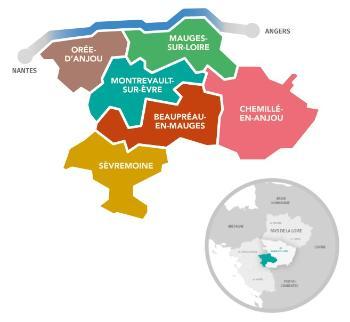
Established in 2016, Mauges Communauté is a rural inter-municipal authority. It brings together 64 historic municipalities into six new municipalities. From 2020, the urban community will take over all responsibilities relating to water, marking a major milestone in its development. It is thus responsible for the conservation of aquatic environments, flood prevention in collaboration with the Loire Public Establishment (EPL), the production and distribution of drinking water through a contractor, sanitation – whether collective or individual – and stormwater management. Eighty-five staff members work daily to manage all these responsibilities, in close collaboration with local authorities and partner organisations. The area has a population of 123,000. It comprises 85 rural sewerage systems, two in-house drinking water treatment plants and one operated in partnership with SIDAEP, 3,000 km of water networks – some of which date back to the 1960s – and 53,000 customers.
Sources
Document from the Loire-Bretagne Water Agency: L’eau, ressource essentielle : comment Mauges Communauté construit une politique publique intégrée - Water, an essential resource: how Mauges Communauté is developing an integrated public policy
To go further
(In French)
-
Drinking water, sanitation and stormwater. Website of Mauges Communauté