Porto: Spatial and Temporal Dispersal of Visitor Flows
2026
Urban Agenda for the EU (UAEU)
Porto, a UNESCO-listed city where tourism brings €501 million annually but strains historic neighborhoods, faced a familiar challenge: visitor flows were overwhelming its most iconic districts. To ease the pressure, the city launched a 2022–2027 strategy to diversify tourism spatially and temporally, splitting Porto into 8 distinct quarters—each with its own identity and appeal. Backed by a shared governance model (municipality, DMO, operators, residents, and academia), the plan uses digital storytelling, training programs, and an observatory to guide visitors toward underutilized areas while preserving the city’s authenticity.
The goal? A more balanced tourism economy that benefits all of Porto, not just its postcard spots.
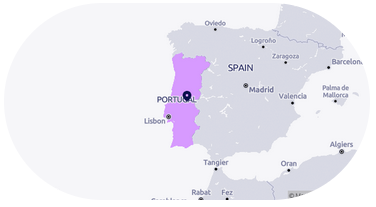
Porto, a UNESCO World Heritage city of 252,000 inhabitants, develops the Future vision for the sustainability of the Porto Destination (2022–2027), a strategic framework to diversify tourism markets and segments, and to promote the spatial and temporal dispersal of visitor flows. The strategy rests on three pillars — Qualify, Diversify, and Preserve — and operates through a shared governance model involving the municipality, the DMO, tourism operators, academia, residents, and mobility authorities, aiming to reduce pressure on saturated areas while ensuring that tourism remains a source of shared value for residents and the city alike.
Presentation and context
Local context, vision and challenges
Porto’s rapid tourism growth has concentrated visitor flows in a limited number of historic neighbourhoods, creating pressure on public space, mobility systems, housing, and residents’ quality of life. The city’s tourism revenue reaches €501 million annually, but this economic benefit is unevenly distributed — with significant concentration in the downtown, Atlantic, and historic quarters, while other districts remain underutilised as tourism destinations despite having equally authentic assets.
The strategy recognises that redistributing flows is not a short-term fix: changing visitor behaviour, building new tourism products, and shifting market perceptions requires sustained investment over multiple years. A key governance challenge is managing this transition in a way that preserves Porto’s local identity and cultural heritage — ensuring that diversification does not dilute what makes the city distinctive — while simultaneously improving accessibility, extending the visitor economy across the city, and maintaining residents’ support for tourism as a sector.
Key stakeholders and partners
The strategy is coordinated by the Municipality of Porto (CMP) and Visit Porto, the city’s DMO, which provides strategic direction, marketing capacity, and operational coordination. The Municipal Tourism Council serves as a formal governance body integrating tourism operators, the hospitality and training sector, mobility authorities, residents, and academia. This quintuple helix model — involving public sector, private operators, universities, civil society, and residents — is central to the strategy’s legitimacy and adaptive capacity. Ongoing surveys to tourists, residents, and tourism operators provide continuous feedback that informs strategic adjustments.
Implemented solutions
-
1 City, 8 tourism quarters: A territorial diversification strategy that creates distinct identities and visitor itineraries for eight city districts — including Downtown, Atlantic, Historic, University, Bonfim, Boavista, Campanhã, and Republic — redistributing visitor flows spatially and creating economic opportunities in less-pressured neighbourhoods. The strategy is supported by strong digital communication: social media reach increased by over 13 million across Facebook and Instagram between 2023 and 2025.
-
Trust Porto — hospitality quality programme: Professional training for tourism agents, connecting visitors to the 8 tourism quarters through certified quality services, while regulating public space (street performers and tourist buses) and expanding pedestrian areas across the city.
-
Porto Tourism Observatory: A monitoring system tracking visitor flows, tourist and resident perceptions, and operator assessments through regular surveys. This provides the evidence base for strategic decisions and continuous adjustment of the diversification strategy.
-
Accessible tourism programme: Launched in 2025, this programme covers accessibility diagnoses across 60 attractions, 5 accessible routes, and the publication of a multiform kit (digital and physical) for each attraction — positioning Porto as an inclusive destination and expanding the potential visitor base.
-
PlanYourJourney and emotional digital storytelling: A digital platform offering personalised itinerary planning across the 8 quarters, combined with local storytelling that highlights people, everyday life, and cultural meanings — shaping visitor expectations and guiding them towards authentic, less-pressured experiences.
Results and impact
Key to success and enabling conditions
A shared consensus on the value and the challenges of tourism — built through sustained stakeholder engagement including residents, operators, and the Municipal Tourism Council — provides the political and social foundation for the strategy. Strong digital communication capacity has been essential to repositioning Porto’s districts and shifting visitor expectations through storytelling rather than simple promotion. Monitoring local sentiment through resident surveys creates a feedback loop that keeps the strategy grounded in liveability objectives. Data-driven management through the Tourism Observatory ensures that strategic adjustments are informed by evidence rather than assumptions.
Lessons learnt ant transfer tips
-
Develop a clear and shared vision from the outset — sustainable tourism strategies are most effective when all stakeholders, including residents, understand and align around a common definition of what kind of tourism the city seeks to promote.
-
Involve residents and operators continuously, not only at the design stage — trust, legitimacy, and adaptive capacity all depend on sustained engagement that genuinely responds to feedback.
-
Invest in micro-destinations and district-level identities rather than promoting the city as a uniform brand — dispersing tourism spatially requires creating real and differentiated reasons to visit each area.
-
Use emotional storytelling in digital communication: content that highlights local people, stories, and cultural meanings is more effective at guiding visitors towards alternative areas than functional information alone.
-
Accept that redistribution of flows takes time — changing visitor behaviour, market perceptions, and established patterns of movement requires long-term commitment and patience, and short-term metrics will not capture the full impact of the strategy.
Sources
Online document : Porto: Spatial and Temporal Dispersal of Visitor Flows
To go further
Website : www.urbanagenda.urban-initiative.eu/