CULTIGEN: Copenhagen’s approach to sustainable tourism
June 2026
European Urban Initiative (EUI)
Tourism doesn’t have to harm residents—it can empower them.
This groundbreaking framework puts local wellbeing at the heart of urban planning, proving that cities thrive when tourism strategies start with their people. It replaces superficial signposting with real investment in undervisited areas, uses reward-based systems like CopenPay to shift behavior without restrictions, and harnesses Citizens’ Assemblies to navigate complex trade-offs.
The result? Resilient, politically sustainable cities where tourism benefits communities as much as visitors—turning challenges into opportunities for equitable growth.
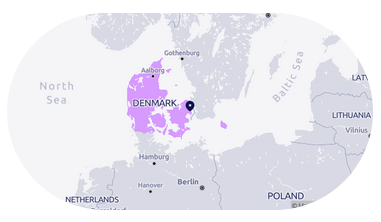
Copenhagen recorded 13 million bednights in 2024 (+4.1% year-on-year), with an ambition to reach 15 million by 2030. Yet only around one-third of Copenhagen residents currently express a positive perception of tourism — a figure that anchors the city’s fundamental policy orientation. Copenhagen’s tourism strategy is built on a residents-first principle: tourism is not treated as an end in itself, but as a managed outcome within broader urban objectives of liveability, sustainability, and social inclusion.
The city coordinates tourism across four mayoral portfolios and embeds it fully within municipal development plans, urban planning decisions, mobility strategies, and cultural frameworks. Key operational tools include the EU-funded CULTIGEN project, the CopenPay behavioural incentive scheme, the ‘New Seasons, New Places’ visitor dispersion initiative, and a Citizens’ Assembly on the Future of Tourism.
Presentation and context
Copenhagen’s guiding principle is simple and demanding: « If we create a city that is a great place to live, it will also be a great place to visit. » Tourism planning is grounded in what residents value, want to protect, and how they envision their neighbourhoods evolving. This requires moving beyond traditional destination management towards genuine urban governance in which tourism is one dimension among many — alongside housing, mobility, labour markets, public space, and environmental sustainability.
The city operates four mayoral competencies relevant to tourism (Employment and Business, Culture and Leisure, Technical and Environmental, and Finance), recognising that balanced tourism management cannot be achieved by a single department working in isolation. Visitor dispersion — both temporal (seasonality) and spatial (across neighbourhoods beyond the historic centre) — is a core strategic priority, pursued through CULTIGEN’s neighbourhood destination development work in three non-central districts.
CULTIGEN (CULture, Tourism, reGEneration through innovative digital solutions and governance platforms) is funded by the European Urban Initiative (80% EUI, total budget €4.7 million, timeline December 2024–May 2028). Partners include the City of Copenhagen, Wonderful Copenhagen (DMO), DTU (Technical University of Denmark), the National Museum of Denmark, STORYHUNT, We Do Democracy, and Kulturdistriktet. The Ambassador Network engages hotel directors, cultural centre managers, local business representatives, and community leaders across three target neighbourhoods. The Citizens’ Assembly (January–May 2026) involves 36–99 members selected by civic lottery, stratified by age, gender, education, and residence, following OECD deliberative democracy principles.
Implemented solutions
-
CULTIGEN Urban Listening Toolkit: An integrated platform combining quantitative data (mobility flows, visitor counts, spatial distribution) with qualitative inputs (resident feedback, sentiment analysis, participatory mapping) to create a continuous feedback loop between citizens and city managers.
-
CopenPay: A behavioural incentive scheme rewarding visitors and residents for sustainable actions — cycling, using public transport, visiting less-known neighbourhoods, participating in community activities — with access to cultural experiences, discounts, and services. Already demonstrating measurable shifts in visitor flows to less-visited areas and seasons.
-
Citizens’ Assembly on the Future of Tourism: A deliberative democracy process guided by the question « How will tourism look in 2030 if it is to help make Copenhagen a better place to live and visit? » The assembly operates at arm’s length from city government and produces concrete, binding-in-spirit recommendations.
-
New Seasons, New Places: A coordinated destination development programme extending the tourism offer beyond the historic centre and beyond peak summer, linking urban design, storytelling, and business development in three non-central neighbourhoods.
-
Self-guided audio walk (CULTIGEN/STORYHUNT): A neighbourhood-level tool introducing visitors to local history and identity through resident ambassadors’ stories, demonstrating how dispersal can be achieved through cultural depth rather than marketing redirection.
Results and impact
Copenhagen’s approach is enabled by strong political will across multiple mayoral portfolios, sustained EU funding through the CULTIGEN project, and a city culture of innovation and civic engagement. The integration of tourism within the city’s broader development strategy — rather than treating it as a separate sector — is both a governance achievement and a precondition for coherent action. The CULTIGEN project’s neighbourhood focus is building institutional capacity and community relationships that will outlast the project funding period. The main challenge identified is maintaining positive resident sentiment over time as visitor numbers grow: at current levels of resident satisfaction with tourism, the city’s own targets for growth require careful management of the relationship between visitor experience and residential liveability.
-
Residents must be the starting point, not a stakeholder among others: tourism planning that begins with resident wellbeing produces more resilient and politically sustainable outcomes.
-
Dispersal works through development, not signposting: directing visitors to new areas requires genuine investment in making those areas attractive and well-served, not just marketing.
-
Behavioural change is achievable through positive incentives: CopenPay demonstrates that reward-based approaches can shift behaviour effectively without restrictive regulation.
-
Deliberative democracy is a practical governance tool: Citizens’ Assemblies can produce concrete, implementable recommendations on complex trade-offs that normal political processes find difficult to resolve.
Sources
To go further
European Urban Initiative : Programme/Initiative