La Rochelle: Regulating Short Term Rentals
2026
European Urban Initiative (EUI)
La Rochelle, a coastal city where tourism fuels both prosperity and housing pressure, faced a growing challenge: short-term rentals were reshaping its neighborhoods. With second homes rising to 25% of the city center and online listings far outpacing official registrations, the city acted. Through gradual regulation—mandatory registration, change-of-use restrictions, and a ban on key boxes—La Rochelle aimed to reclaim 1,500 homes for residents by 2030.
Backed by academic research and political resolve, it proved that protecting housing doesn’t mean rejecting tourism—but ensuring both can coexist.
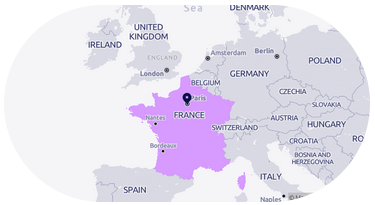
La Rochelle is a medium-sized French coastal city with 80,000 inhabitants in its central municipality and 180,000 across its urban community (28 municipalities). Tourism is central to the local economy: generating €600 million in economic benefits, supporting 8,500 jobs (10% of total employment), and recording 7.6 million overnight stays in 2025. From 2018 onwards, rapid growth of short-term rental platforms caused acute pressure on the housing market, driving accommodation shortages, rising rents, and growing difficulties for students and seasonal workers. La Rochelle’s response has been evidence-led, graduated, and politically courageous: building a regulation framework in stages, backed by academic research, while navigating sustained legal challenges rooted in EU competition law.
Presentation and context
Local context, vision, challenges
By 2019, La Rochelle had 2,500 officially registered tourist rentals compared to 6,500 active online listings — a compliance gap that underscored the limits of self-regulation. The share of second homes in the city centre rose from 18% to 25% between 2014 and 2020, displacing private renters. By 2025, the urban community counted 9,117 active registered furnished tourist rentals, including 6,198 in the city alone — a 137% increase since 2020, with growth now slowing.
La Rochelle’s approach integrates tourism attractiveness with housing protection through a Balanced Tourism Strategy (2023–2030), which targets the return of 1,500 STR properties to year-round residential use. The city has been candid that regulation is not anti-tourism but pro-community: tourism remains essential, and the goal is to ensure it does not undermine the social fabric that makes the city worth visiting.
Key stakeholders and partners
The regulatory process was built in close partnership with La Rochelle University, whose doctoral research project ‘AquiAirBnB’ provided the evidence base for political decision-making. The university also leads the ‘furnished tourist accommodation observatory’, combining data records, supplementary studies, and neighbourhood-level impact analysis. The Communauté d’Agglomération de La Rochelle coordinates the overall strategy across 28 municipalities. La Rochelle is currently involved in the Interreg Europe project Tourism4SDG.

Implemented solutions
-
Mandatory registration and registration number system (2020): Introduction in high-pressure housing areas under existing national legislation (Loi ALUR and Loi République Numérique), including temporary change-of-use authorisations renewable every three years across 10 municipalities.
-
Permanent change-of-use restrictions (2022): New rules limited each owner to a single permanent change-of-use authorisation, with a compensation requirement obliging conversion to long-term housing.
-
Code box ban (2024): A targeted measure banning key boxes from street furniture, disrupting the physical infrastructure supporting informal and non-compliant STR operations.
-
Furnished tourist accommodation observatory: A data system combining registration data, platform monitoring, university research, and neighbourhood-level impact studies — providing the evidence base for both regulation and financial incentive design.
-
Financial incentive package: Energy grants, unpaid rent guarantees, and incentive bonuses under development to encourage voluntary reconversion of STRs to year-round residential use, complemented by the Le Meur-Échaniz law strengthening mayoral enforcement powers.
Results and impact
Key to success and enabling conditions
La Rochelle’s regulatory approach has been enabled by strong political commitment from elected representatives willing to defend controversial measures through extended legal proceedings, sustained investment in academic partnership and data infrastructure, and a graduated approach that built evidence and compliance capacity before escalating regulation. The creation of a formal university-city research partnership gave the process technical credibility and legal defensibility. The main lesson for other cities is that bold local action on STRs is possible — but requires patience, evidence, political resilience, and ultimately stronger EU-level legal backing to be fully effective.
Lessons learnt and transfer tip
-
Regulation is no longer optional — the question is not whether to regulate, but how to do so with sufficient evidence and political backing to withstand legal challenge.
-
Build the evidence base first: the university partnership and observatory were essential preconditions, not optional extras. Data must be objective and based on official internal tools.
-
Enforcement remains the critical barrier: without EU-level backing and cross-border data sharing, bold local measures face years of legal delays. La Rochelle’s 2022 regulations were suspended in March 2023 and only upheld in September 2025, three years after introduction.
-
Shift the narrative: regulating STRs is pro-community, not anti-tourism. Clear public communication is essential to maintaining political support.
-
STR platforms currently require case-by-case bilateral negotiations, creating an uneven playing field — EU-level platform regulation and data-sharing obligations are urgently needed.
Sources
Online document : La Rochelle: Regulating Short Term Rental
To go further
Website : www.urban-initiative.eu/