Accelerating Urban Freight Decarbonisation
A City Guide to EV Trucks Tipping Points
June 2026
Amidst the hustle and bustle of modern cities, delivery lorries – although often overlooked – account for 25 per cent of the transport sector’s CO₂ emissions, whilst making up just 10 per cent of the global commercial fleet.
With demand for freight set to double by 2050, the transition to electric vehicles is no longer an option, but a climate and economic necessity.
This guide, the result of a collaboration between C40 Cities, the University of Exeter and ARUP1, shows how cities can become key players in this revolution, drawing on inspiring case studies and robust economic modelling.
To download : c40_cities_2026_accelerating_urban_freight_decarbonisation_-_a_city_guide_to_ev_trucks_tipping_points.pdf (6.5 MiB)
An undeniable reality : urban freight at a crossroads
The freight transport sector is currently at a crossroads. On the one hand, there is inevitable growth : since 2010, the volume of goods transported by heavy goods vehicles has increased by more than 30 per cent (IRENA, 2024, p. 5). On the other, a climate emergency that brooks no further delay. Heavy-duty vehicles, although few in number, are giants in terms of emissions — and their impact will only worsen if nothing is done.
Yet the solution exists : electrification. But it faces a stubborn reality. In 2025, 26 per cent of passenger cars sold worldwide were electric, compared with barely 8 per cent for lorries and vans (BloombergNEF, 2025, p. 10). Why such a disparity ? Because electric lorries face structural barriers that are far more complex than those faced by light vehicles.
Take payload constraints, for example. Lithium-ion batteries, however efficient they may be, remain much less energy-dense than diesel. For a long-haul lorry — those covering 500 to 800 km a day — the weight of the batteries required can reduce load capacity, thereby undermining their profitability. Add to this purchase costs two to three times higher than those of a combustion-engine lorry, charging times that are still too long for optimised logistics, and a service life for diesel fleets that can reach 30 years, and you will understand why the status quo persists (pp. 10–11).
Yet there are encouraging signs on the horizon. In China, the cradle of electric vehicle innovation, 80 per cent of the electric lorries sold worldwide in 2024 were sold there (IEA, 2025, p. 7). Better still: in some regions, such as Beijing, total cost of ownership (TCO) parity – that magic threshold where an electric lorry becomes as cost-effective as a diesel one over its entire lifespan – has already been reached (p. 8). But here’s the paradox: even in these pioneering areas, electric lorries will not overtake their combustion-engine counterparts for another decade. Proof that cost alone is not enough. We need to act on three fronts simultaneously: affordability, accessibility and attractiveness.
The three pillars of a successful transition
For a clean technology to become established, it must cross what economists call a positive tipping point—that moment when virtuous feedback loops become more powerful than the obstacles, making adoption self-sustaining and exponential.
In the case of electric lorries, this tipping point rests on three inseparable pillars (pp. 8–9).
Affordability: making electric vehicles competitive
The first, and most obvious, obstacle is price. Today, an electric lorry costs two to three times as much as an equivalent diesel model (pp. 10). This price difference is a cause for concern among hauliers, particularly in emerging economies where profit margins are already tight. However, this picture is misleading. For whilst the initial investment is high, the total cost of ownership (TCO) may, in the long run, favour electric vehicles.
In China, for example, studies show that electric lorries can reduce the TCO by between 10 per cent and 26 per cent over their lifetime, thanks to lower energy and maintenance costs (Hu et al., 2025, p. 10).
How can this transition be accelerated ? By combining purchase subsidies, tax exemptions and operational incentives. China has thus introduced a credit scheme for new energy vehicles, obliging manufacturers to produce electric lorries or face financial penalties. The result : a self-sustaining market, where supply and demand drive each other forward (p. 13).
In India, the PM E-DRIVE programme offers targeted subsidies for lorries weighing over 3.5 tonnes, whilst the state of Maharashtra goes a step further by completely waiving registration and road tax for electric vehicles (p. 13). These measures, when combined, reduce the cost gap and make electric vehicles accessible to small and medium-sized transport companies.
Accessibility: breaking down infrastructure barriers
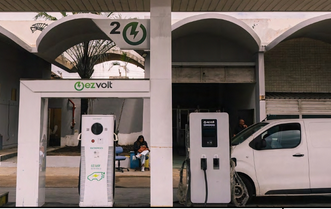
Buying an electric lorry is one thing. Being able to charge it is quite another. And that is where the problem lies. Heavy goods vehicles, unlike cars, require ultra-high-power charging points — at least 120 kW for effective charging whilst on the road. However, in many countries, such infrastructure is sorely lacking.
In Brazil, for example, only 30 per cent of public or semi-public charging points are direct current (DC), and a tiny fraction provide the power required for lorries (p. 11).
How can this be addressed ? By utilising public assets. In Delhi, municipal bus depots have been fitted with high-power charging points, accessible to private operators. This is a clever solution that gets round the problem of space — a scarce and costly commodity in city centres — whilst encouraging adoption (p. 18).
Cities can also anticipate future needs by incorporating pre-wiring requirements into their building regulations. In Amsterdam, Rotterdam, Berlin and Düsseldorf, all new commercial buildings with more than 10 parking spaces must now include operational charging points and pre-wiring for 20 per cent of the spaces (p. 17). This measure will, in the long term, make access to charging more widespread and avoid exorbitant retrofitting costs.
Finally, public-private partnerships offer another avenue. In Rio de Janeiro, the city council has launched a ‘regulatory sandbox’ programme, allowing private companies to test ultra-fast charging hubs on municipal land, with reduced administrative burdens (p. 18). This agile approach has already led to the opening of Brazil’s first public charging hub for lorries, with the aim of having 15 such hubs in place by 2028.
Attractiveness: making electric the obvious choice
Even if it is affordable and accessible, an electric lorry will not catch on unless it is perceived as superior to its diesel equivalent. This is where attractiveness comes into play. And cities have considerable power in this regard: the power to make life easier for environmentally responsible hauliers.
In Shenzhen, China, electric lorries enjoy 24-hour access to green logistics zones, whilst diesel vehicles have been banned from city centres since 2018 (p. 16). This is a major operational advantage, saving transport operators both time and money. In São Paulo, the Rodízio system — which restricts vehicle traffic based on number plates — exempts electric lorries, allowing them to operate five days a week instead of four. The result : a 20 per cent improvement in vehicle utilisation rates, without any additional investment (p. 16).
Public procurement offers another powerful lever. By mandating 100 per cent electric fleets for municipal services — street cleaning, waste collection, etc. — cities send a strong signal to the market. In Rotterdam, tenders for waste collection now require zero-emission vehicles (p. 17). A measure which, as well as reducing emissions, demonstrates the feasibility of the transition and encourages private operators to follow suit.
3. The key role of cities: laboratories of innovation
Whilst states and national governments have a role to play — particularly in terms of subsidies and regulations — it is cities that hold the keys to a rapid transition. For it is at their level that the accessibility and appeal of electric lorries are determined.
Regulating to accelerate
Of all the tools at their disposal, regulation is undoubtedly the most effective. Low-emission zones (LEZs), for example, have proven their worth. In Amsterdam and Rotterdam, their introduction in 2025 led to a threefold increase in the market share of heavy-duty electric lorries in barely a year (p. 15). How ? By banning the most polluting vehicles from city centres, these zones create a captive market for clean lorries.
But LEZs are just the beginning. Cities can go further by imposing procurement mandates for public and private fleets, or by incorporating charging requirements into their building regulations. In Mumbai, for example, 50 per cent of new commercial parking spaces must now be ‘EV-ready’, and 20 per cent of existing buildings with shared car parks must have operational charging points (p. 17). These measures will, in the long run, make electrification inevitable.
Leading by example
Cities can also lead by example by electrifying their own fleets. In Shenzhen, the local authority operates nearly 3,000 electric commercial vehicles, including refuse collection lorries and street-cleaning lorries (p. 17). By outsourcing the financial burden to private operators via competitive tendering, the city is meeting its climate targets without straining its budget.
Another inspiring example: Curitiba, in Brazil. A one-year trial with municipal electric lorries was enough to convince the authorities to roll out the city’s first public charging hub and to include zero-emission clauses in its future tenders (p. 21). Proof that local experimentation can lead to systemic change.
Working together to amplify the impact
But cities cannot — and must not — act alone. Freight transport knows no administrative boundaries, and regional cooperation is essential to create charging corridors enabling electric lorries to travel long distances.
This is the aim of the e-Dutra project in Brazil, which aims to equip the 400-km road linking São Paulo to Rio de Janeiro with ultra-fast charging points by 2030. Led by C40 Cities and The Climate Pledge, this corridor will enable the 1,000 electric lorries planned to travel without fear of their batteries running out (p. 20). An initiative which, if scaled up, could revolutionise freight transport across the whole country.
In India, the e-FAST programme goes even further by bringing together manufacturers, logistics providers and cities around a unified market signal for more than 7,500 electric lorries. This approach reduces risks for manufacturers and accelerates the fall in costs (p. 21).
Some examples of cities leading the way
Whilst the theory is convincing, nothing beats concrete examples to illustrate the way forward.
-
Shenzhen, China : With 31,000 electric lorries registered in 2023 — three times as many as in Guangzhou, its closest rival — the city has become a global model (p. 10).
Its secret ? A combination of national subsidies, strict local regulations (a ban on light diesel lorries) and operational advantages (24-hour access to logistics zones). The result : widespread adoption, driven by a local industrial supply chain (batteries, assembly) that keeps costs down.
-
Amsterdam and Rotterdam, Netherlands : These two cities have tripled their market share of heavy-duty electric lorries in a year thanks to their zero-emission zones (p. 15). By imposing access restrictions on polluting vehicles, they have created captive demand for clean lorries, whilst stimulating innovation among hauliers.
-
Rio de Janeiro, Brazil : The city has opened the country’s first public charging hub for lorries, thanks to a public-private partnership and a flexible regulatory framework (p. 18). With a target of 15 hubs by 2028, Rio demonstrates how a pragmatic approach can accelerate the transition.
-
Delhi, India: By equipping its municipal bus depots with high-power charging points, the city has solved the space issue for private operators (p. 18). A simple yet highly effective solution.
-
Curitiba, Brazil : Following a successful trial of municipal electric lorries, the city has rolled out its first charging hub and incorporated zero-emission clauses into its tenders (p. 21). Proof that local experimentation can inspire wider change.
Recommendations : an action plan for local authorities
The report does not merely set out the current situation or describe successes : it proposes a clear roadmap for cities wishing to take action. Here are the six strategic priorities to follow (pp. 19–20) :
-
Firstly, understand your context.Every city is unique, with its own specific constraints (overloaded electricity grid, high property costs, resistance from transport operators). It is therefore essential to identify local obstacles before taking action. A city with strong public purchasing power but little national support could start by electrifying its municipal fleets and creating low-emission zones. Conversely, a city benefiting from generous national subsidies but facing grid constraints should prioritise strengthening its charging infrastructure.
-
Secondly, stabilise policies. Transport operators need predictability to invest in electric lorries, which can have a lifespan of over 10 years. Announcing bans on internal combustion engine vehicles well in advance — as Delhi has done by banning new diesel and petrol lorries for delivery fleets from 2026 (p. 14) — allows industry players to adapt gradually. Cities can also make public commitments through international frameworks, such as the Global MoU on Zero-Emission MHDVs, to reassure investors.
-
Thirdly, utilise municipal assets. Cities have under-utilised resources : depots, car parks, derelict land.
By making these available to private operators for the installation of charging points, they accelerate the transition without straining their budgets. In Delhi, for example, municipal bus depots have been transformed into shared charging hubs (p. 18).
-
Fourthly, collaborate with regional stakeholders. Freight transport does not stop at administrative boundaries. Cities must therefore work hand in hand with their neighbours, as well as with regional and national governments, to map out and roll out charging infrastructure along major logistics corridors. The e-Dutra project in Brazil is a perfect example of this (p. 20).
-
Fifth, act collectively. There is strength in numbers. By pooling their orders for electric lorries, cities can negotiate favourable rates with manufacturers and reduce costs for everyone. This is the aim of the e-FAST programme in India, which has consolidated demand for 7,500 lorries (p. 21).
-
Finally, anticipate workforce needs. The transition to electric power is not limited to vehicles : it also requires a skilled workforce to maintain and repair them. Cities must therefore invest in training, in partnership with technical colleges and industry. In North Rhine-Westphalia (Germany), specialised courses have been set up to train the technicians of tomorrow (p. 14).
Conclusion : towards a zero-emission future
The transition to electric lorries is not just a question of technology or cost : it is a systemic change that requires seamless coordination between cities, governments, manufacturers and hauliers. Local authorities, through their proximity to citizens and businesses, have a central role to play. By combining regulation, innovation and cooperation, they can accelerate the decarbonisation of urban freight transport and make their streets cleaner, quieter and more sustainable.
Examples from Shenzhen, Amsterdam and Rio de Janeiro show that tipping points are possible. But to achieve this, action must be taken simultaneously across all three pillars — affordability, accessibility and attractiveness — and we must dare to innovate.
So, what if your city were to become the next success story ?
1 ARUP is a British engineering consultancy specialising in the design, planning and management of projects in the built environment and infrastructure sectors. Founded in 1946, ARUP is recognised as one of the world’s leading providers of technical and strategic consultancy services for a wide range of projects, from buildings and transport to energy and water networks, sustainable urban planning and technological innovation.
Sources
To go further
-
University of Exeter : www.exeter.ac.uk/
-
ARUP : www.arup.com
-
The Climate Pledge : www.theclimatepledge.com/
-
C40 Cities : www.c40.org/